Sustainable Tourism in Halong Bay and Lan Ha Bay: What Travelers Should Know
Halong Bay and Lan Ha Bay are among the most remarkable destinations in Vietnam, famous for their limestone islands, emerald waters, floating communities, caves, beaches, and peaceful seascapes. As tourism continues to grow, protecting these natural environments has become increasingly important.
For travelers planning a cruise, sustainable tourism is no longer simply a trend. It is a practical way to enjoy Vietnam’s iconic bays while helping preserve them for future generations. From choosing responsible cruise operators to reducing plastic waste and respecting local communities, every travel decision can make a difference.
If you are considering a cruise experience such as Lamour Cruises, understanding the principles of responsible travel can help you enjoy Halong Bay and Lan Ha Bay in a more meaningful way.
Why Sustainable Tourism Matters in Halong Bay and Lan Ha Bay
The unique landscapes of Halong Bay and Lan Ha Bay are naturally delicate. Thousands of limestone islands and karst formations have developed over millions of years, while the surrounding waters support marine ecosystems and coastal communities.
Tourism brings important economic benefits to the region. However, large visitor numbers can also create challenges, including:
Sustainable tourism aims to balance these factors by allowing visitors to experience the bays while minimizing negative environmental and social impacts.
What Does Sustainable Cruising Mean?
Sustainable cruising involves more than simply keeping the sea clean. It includes the way cruise companies manage resources, interact with local communities, and organize excursions.
A responsible cruise experience can involve several elements:
1. Reducing Single-Use Plastic
Plastic waste is one of the most visible environmental concerns in coastal tourism. Travelers can contribute by carrying reusable water bottles, avoiding unnecessary plastic packaging, and using refill stations whenever available.
Cruise operators can also reduce their environmental footprint by limiting disposable items and improving waste collection and sorting onboard.
2. Responsible Waste Management
Waste generated on boats needs to be handled carefully. Food waste, wastewater, packaging, and other materials should not be released directly into the marine environment.
Travelers can support responsible practices by following onboard recycling instructions and never throwing anything into the water.
Even a small item such as a plastic wrapper can become marine pollution.
3. Protecting Marine Life
The waters around Halong Bay and Lan Ha Bay are home to various forms of marine life. Activities such as kayaking, swimming, and boating should therefore be conducted with care.
Visitors should avoid touching marine organisms, collecting shells or rocks, feeding wildlife, or entering restricted areas.
When kayaking or taking a small boat excursion, staying within designated areas helps minimize disturbance to sensitive habitats.
Choosing a Responsible Cruise Operator
One of the most important decisions travelers can make is choosing a cruise company that takes environmental responsibility seriously.
Before booking a Halong Bay or Lan Ha Bay cruise, consider looking for information about:
Travelers should also be cautious about vague claims such as “eco-friendly” or “green cruise.” Look for specific information about what the company actually does.
For travelers researching cruise options, Lamour Cruises can be considered alongside other operators when comparing the overall cruise experience, itinerary, onboard practices, and approach to responsible tourism.
Supporting Local Communities
Sustainable tourism is not only about protecting nature. It is also about ensuring that tourism benefits the people who live in the destination.
Halong Bay and Lan Ha Bay are connected to communities whose livelihoods have traditionally depended on fishing, aquaculture, transportation, handicrafts, and tourism.
Travelers can support local communities by:
A responsible traveler understands that the destination is not simply a sightseeing backdrop. It is also a place where people live and work.
Sustainable Activities in Halong Bay and Lan Ha Bay
Not every activity has the same environmental impact. Travelers interested in sustainable tourism can choose experiences that encourage appreciation of nature rather than intensive consumption of natural resources.
Kayaking
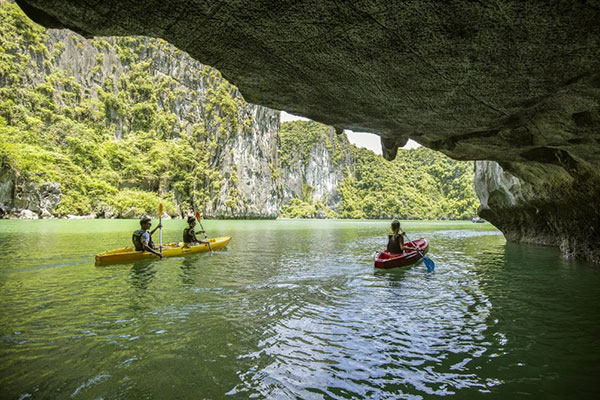
Kayaking is one of the most popular ways to explore the quieter corners of the bays. Because kayaks do not require fuel-powered engines, they can provide a relatively low-impact way to experience the landscape.
Travelers should follow designated routes and avoid disturbing wildlife or entering sensitive areas.
Exploring Caves Responsibly
Caves are among the most fascinating attractions in Halong Bay. Their geological formations are extremely valuable and should be treated with care.
Visitors should never touch formations unnecessarily, leave rubbish behind, or remove stones or other natural objects as souvenirs.
Swimming
Swimming in designated areas can be an enjoyable way to experience the clear waters of the bay. Travelers should follow safety instructions and respect restrictions established to protect both visitors and the environment.
Cycling and Village Experiences
In parts of Lan Ha Bay and nearby Cat Ba Island, cycling and village visits can provide a more community-oriented travel experience.
These activities can encourage travelers to spend more time in local communities rather than simply visiting major attractions for a short period.
How Travelers Can Reduce Their Environmental Footprint
Sustainable tourism does not require travelers to give up comfort or enjoyment. Instead, it involves making more thoughtful decisions throughout the journey.
Here are several simple habits to consider:
Bring a Reusable Water Bottle
A reusable bottle can significantly reduce the need for disposable plastic bottles during a cruise.
Avoid Single-Use Plastics
Say no to unnecessary plastic bags, straws, cups, and packaging whenever practical.
Never Throw Anything Into the Sea
This is one of the most important rules. Even biodegradable materials should not automatically be discarded into the marine environment.
Respect Wildlife
Observe animals from a safe distance and never attempt to feed, touch, chase, or capture them.
Follow Cruise Guidelines
Cruise operators establish rules for environmental and passenger safety. Following these guidelines is an easy way to contribute to responsible tourism.
Choose Quality Over Quantity
Instead of trying to visit as many attractions as possible, consider slowing down and appreciating fewer places more deeply.
This approach aligns well with the growing interest in slow travel and experiential tourism.
Sustainable Food on a Halong Bay Cruise
Food is another important part of sustainable travel.
Cruise operators can contribute to sustainability by sourcing ingredients locally, reducing food waste, and selecting seasonal products where practical.
Travelers can also help by ordering appropriate portions and avoiding unnecessary food waste.
At the same time, visitors should be mindful when consuming seafood. Choosing responsibly sourced seafood and avoiding protected or threatened species helps reduce pressure on marine ecosystems.
Sustainable Tourism and the Future of Halong Bay
The future of Halong Bay and Lan Ha Bay depends on maintaining a balance between tourism development and environmental protection.
As travelers become more environmentally conscious, cruise companies are likely to face increasing expectations regarding:
This shift could also improve the overall visitor experience. Less waste, better-managed attractions, and more responsible tourism can help preserve the peaceful atmosphere that makes the bays so special.
Why Responsible Travel Makes the Experience Better
Sustainable tourism is sometimes viewed as an additional responsibility placed on travelers. In reality, it can make a trip more rewarding.
A quieter kayaking route, a locally prepared meal, a conversation with a village resident, or an excursion focused on nature can create memories that are more meaningful than simply checking attractions off a list.
For travelers booking Lamour Cruises or another Halong Bay and Lan Ha Bay cruise, responsible choices can transform a conventional sightseeing trip into a more conscious travel experience.
A Simple Sustainable Travel Checklist
Before your Halong Bay or Lan Ha Bay cruise, consider this checklist:
Before the trip
During the cruise
When visiting local communities
After the trip
Sustainable tourism in Halong Bay and Lan Ha Bay is a shared responsibility between cruise operators, local communities, authorities, and travelers.
Visitors do not need to make dramatic changes to travel more responsibly. Small actions—reducing plastic, respecting wildlife, minimizing waste, supporting local communities, and choosing responsible cruise companies—can collectively make a meaningful difference.
Whether you are planning a short getaway or a longer cruise experience, taking the time to understand sustainable tourism can help protect the extraordinary landscapes of Halong Bay and Lan Ha Bay.
For travelers considering Lamour Cruises, sustainability can be one of several factors to evaluate alongside itinerary, accommodation, activities, service, and overall cruise experience. The best journey is not only one that allows you to discover Vietnam’s natural beauty, but also one that helps ensure that beauty remains for generations to come.
Frequently Asked Questions
Is Halong Bay suitable for sustainable tourism?
Yes. Halong Bay has significant potential for sustainable tourism when visitor activities, waste management, marine protection, and community participation are carefully managed.
How can tourists help protect Halong Bay?
Tourists can reduce plastic use, avoid littering, respect wildlife, follow cruise regulations, conserve water and energy, and support local communities.
Is Lan Ha Bay more sustainable than Halong Bay?
Neither destination should automatically be considered more sustainable. Sustainability depends on how tourism is managed, how cruise operators operate, and how visitors behave.
What should I look for when booking a sustainable cruise?
Look for transparent information about waste management, plastic reduction, wastewater treatment, local community engagement, responsible excursions, and environmental policies.
Can I enjoy a luxury cruise and still travel sustainably?
Yes. Luxury and sustainability are not mutually exclusive. A comfortable cruise can still incorporate responsible resource management, reduced waste, local sourcing, and environmentally conscious activities.
2024 All Rights Reserved. Design by L'amour Cruise Distribution By L'amour Cruise